
I still remember buying my first kayak several years ago. Until then, I never really had to think much about which one to grab. I just hopped into whatever was floating at the family cabin. When I finally decided to buy my own, the number of choices was overwhelming. I wanted four different kayaks, none of which had any business sharing the same garage.
That feeling of uncertainty is something almost everyone experiences. The good news is that choosing the right kayak becomes surprisingly clear once you answer one simple question:
How do you actually plan to use it?
Everything – from length and shape to material and storage – flows naturally from that single decision.
Kayak Types at a Glance
Type | Typical Length | Primary Strength | Skill Level | Ideal For | Good Example |
Recreational | 9–12 ft | High stability and easy handling | Beginner–Intermediate | Casual paddling and family outings | |
Touring | 12–18 ft | Speed and efficiency over distance | Intermediate+ | Long-distance or multi-day trips | |
Sea | 14–20 ft | Tracking and control in waves | Intermediate–Advanced | Coastal exploring and expeditions | |
Whitewater | 6–9 ft | Agility and impact toughness | Intermediate–Advanced | Adventure paddlers and rapid training | |
Fishing | 10–14 ft | Stability and generous gear capacity | Any level | Anglers needing room for equipment | |
Inflatable / Portable | 9–13 ft | Lightweight and storage friendly | Beginner–Intermediate | Apartment dwellers and frequent travelers |
My Kayak Experience
I’ve been paddling on lakes since I was a kid, but I didn’t really appreciate the difference between kayak designs until I spent time on Oregon’s rivers and coastlines. The Pacific Northwest is paradise for variety: sea routes along Port Townsend, rivers like the Deschutes, and calm lakes perfect for learning. Later, I moved to the Northwoods of the USA, enjoying the quiet inland lakes of Minnesota, Wisconsin, and Michigan, and fell in love all over again, the mirror-like waters there practically beg you to glide through them at dawn.
After that came whitewater challenges, mishaps included, and eventually kayak fishing; peaceful, patient, and entirely addictive. What I learned through all of it was that each kayak style feels completely different on the water. They’re not just versions of the same thing, they’re specialized tools built for particular kinds of paddling happiness.
Understanding Kayak Types
Step One: Sit-On-Top vs. Sit-Inside

Your first distinction is simple but essential.
Sit-on-top kayaks feel like open platforms. You sit above the deck, which makes entering and exiting a breeze. They’re stable, ideal for warm weather, and give easy access to your gear. Families, beginners, and anglers often prefer them.
Sit-inside kayaks, meanwhile, hug your body. You’re surrounded by the hull, which means better control, less wind exposure, and more efficient paddling. Touring and sea kayakers lean in this direction because it allows long, smooth tracking across big water.
By 2026, hybrid seats and quick-drain designs have made both types more comfortable than ever, so your decision can center purely on experience, not outdated trade-offs.
Step Two: Purpose and Performance
Every kayak has a personality tuned to a specific goal.
Recreational Kayaks
Shorter and wider, they emphasize stability and friendliness. These are the laid-back, lakefront favorites you’ll find at resorts. For beginners or casual paddlers, recreational kayaks make kayaking feel intuitive, not intimidating.

Touring Kayaks
Built for longer journeys, touring kayaks combine length with precision. They glide efficiently and carry more cargo, turning overnight trips into relaxed explorations. Many touring vessels now include modular bulkheads for gear organization and improved buoyancy.
Sea Kayaks
Sea kayaks are long, slender, and elegant machines. They’re designed to handle waves, currents, and changing weather while staying predictably balanced. Many newer sea designs use lighter composite materials, making them easier to load and launch without sacrificing stability.
Whitewater Kayaks
Compact, nimble, and incredibly tough. The rounded hull and short body make them turn instantly. Most modern whitewater kayaks now use high-density materials that flex rather than crack, standing up to rocks and rapid hits better than older generations.

Fishing Kayaks
These prioritize stability over speed. Kayak anglers love wide bases, standing room, and smart storage for rods and tackle. Modern versions often have comfort seating, adjustable foot braces, and gear track systems for customization, all without adding too much bulk.
Inflatable and Foldable Kayaks
Technology has rapidly improved here. High-pressure inflatables and origami-style folding hardshells now offer real performance without giving up portability. They’re perfect for travelers and anyone with limited storage.
Step Three: Materials and Durability
The kayak’s construction material defines its weight, care requirements, and long-term lifespan. Durability doesn’t always mean heavy, and lightweight doesn’t always mean fragile—the sweet spot depends on use.
- Rotomolded Polyethylene: Durable and affordable but can fade or warp if left in direct sunlight for years. Excellent for recreational and whitewater use.
- Thermoformed ABS Plastic: Smooth finish, lighter, and more eco-friendly than rotomolded plastic. More scratch-resistant and easier to maintain.
- Composites (Fiberglass, Kevlar, Carbon): The elite materials that cut weight, boost speed, and provide stiffness for precise handling. By 2026, the cost gap has narrowed, making mid-range composites more accessible.
- Inflatable PVC/Drop-Stitch Designs: Rigid when inflated, small when packed. Quality varies, but the best examples now rival entry-level hardshells in strength. I used to look at inflatable kayaks as a clear consolidation to the “real thing,” but now I view a highly quality inflatable as every bit as good. But cheap inflatables are a big step down.
A quick rule of thumb: prioritize polyethylene or thermoform if you expect rocky conditions or frequent launching from rough shorelines; go composite if long, smooth touring runs are your playground.
Step Four: Performance Dimensions
Length
Longer kayaks (13–18 feet) track straighter and move faster. They’re perfect for big lakes or coastal travel. Shorter models (under 12 feet) turn easily, better for rivers and tighter waterways.

Width
Wider kayaks trade some speed for steadiness. This is ideal for fishing, casual rides, or first-timers. Narrower kayaks slice the water more efficiently, rewarding paddlers who like rhythm and flow.
Weight & Portability
Kayak weights range from under 25 pounds (some composites and inflatables) to over 80 pounds for fishing rigs. Remember you’ll lift, load, and carry this craft often, so consider how much you’re willing to haul.
Capacity
The kayak’s total weight rating includes you and everything you’re carrying. A 350-pound rating doesn’t mean 350 pounds of paddler—it means combined paddler, gear, and possibly even a dog. Aim to stay under 75–80% of total capacity for safe, efficient performance.
Kayak Design Details Worth Knowing
- Hull Shape: Flat hulls maximize stability; rounded and V-shaped hulls improve speed and tracking. Multi-chine hulls blend the benefits of both.
- Cockpit Size: Comfort matters. You should be able to enter and exit easily with a life jacket on, and still brace your knees for control.
- Rudder or Skeg: A skeg is a fixed or retractable fin that keeps you on course in wind. A rudder moves to help steer. Both improve directional stability, so choose depending on your style—rudder for guiding, skeg for maintaining line.
2026 Innovations and Emerging Features
Kayaking designs have quietly entered a new era. Here are a few trends changing the experience:
- Modular Kayaks: Break-apart sections click together for easier transportation.
- Eco Materials: Some manufacturers now incorporate recycled resins, reclaiming ocean plastic into hulls.
- Adaptive Seating: Adjustable lumbar systems and breathable mesh fabrics have made long paddles more comfortable.
- Refined Inflatables: Reinforced floor chambers make them stable enough for light touring, not just beach fun.
- Smart Add-ons: Accessory rails and integrated mounts let paddlers customize without drilling holes in their canoe or kayak.
These enhancements tend to appear across recreational, touring, and fishing models, not just premium lines, which is a win for anyone wanting higher-quality gear that’s easier to own.
Before You Buy: Your Pre-Paddle Checklist
- Decide where you’ll paddle most often (lake, river, ocean).

- Consider how you’ll transport and store your kayak.
- Choose your desired experience—is your goal relaxation, exercise, or adventure?
- Test for comfortable entry, knee space, and foot position.
- Review maintenance requirements (especially for UV-sensitive plastics).
- Learn basic rescue and safety techniques, even if you paddle calm water.
- Budget for gear such as PFDs, paddles, and dry bags.
Answering these questions narrows the field more effectively than memorizing specs.
What I Paddle, and Why
I’ve settled on two kayaks that I use, when paddling around inland lakes and the occasional slow river. These are not seafaring kayaks, although they can work in quiet bays of big water. They are also not meant for whitewater, which is really its own thing (with its own safety considerations.)
My Go-To Workhorse: Wilderness Systems Pungo 12-footer (here).
I’m a huge fan of the Pungo that I picked up a few years ago from Wilderness Systems. Some people might prefer a shorter 10-footer, but the 12-foot version can pick up nice speed when I’m trying to skim across a lake. I also like it when going against a wind – you get it pointed in the right direction and the momentum can hold course really well. But it is also a stable kayak, something that I feel is a must unless you are a competitive racer – which very few of us are.
If I could only have one all-purpose kayak around, I’d choose this one.
The Fun Inflatable: Bote Koda Aero (here.)
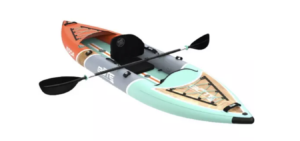
I did not think I’d ever get an inflatable kayak. I am a bit of a paddling purist, and an inflatable just felt like it was selling out. What did it for me was spending lots of time fly-fishing on rivers out west, and discovering that all the fishing guides were using inflatable drift boats. The inflatables had a couple big advantages. First, they could get over rocks because there is just enough give in the material to be slightly malleable when pressed. Second, an inflatable is much lighter (30 lbs for a 12-footer, vs. 50 lbs for a comparable hard poly kayak.)
I’ve found that it is stable, fun to paddle, and can easily fit a dog or second person. But it doesn’t have the same speed as my Pungo.
Frequently Asked Questions
How long should my kayak be for calm lake paddling?
Between 10 and 13 feet usually provides the best blend of speed, tracking, and maneuverability. Most manufacturers offer a 10 footer and a 12 footer as standard options. The longer, the faster. The shorter, the more stable.
Are inflatables really good enough for regular use?
Yes, if you invest in a multi-chamber, high-pressure model. They now handle mild surf and lake travel well while packing in minutes. They key is to not skimp. I’d be leery of any with a price tag of less than $500. It likely means that the quality isn’t there.
How do I protect a polyethylene kayak from sun damage?
Use a UV protectant spray a few times per season and store it indoors or covered when not in use.
Does a lighter kayak always mean better performance?
Not always. Ultralight materials feel great during transport but can flex more in rough chops. Match the weight to the conditions you’ll paddle most often.
Do I need a rudder or skeg?
In windy, open water, a skeg helps your kayak hold its line. A rudder is great for longer trips where steering assistance saves energy.
What safety basics should every kayaker know?
Always wear a Coast Guard-approved life jacket, check local water conditions, pack a whistle, and tell someone your route before heading out.
Final Thoughts
Every kayak tells a story—not just the one you paddle in it, but the one written by its design. Some invite quiet exploration near shorelines, some crave waves, and others are built for steady, meditative distance. When you match purpose to craft, paddling becomes more than a hobby. It becomes a way to learn the rhythm of water itself.
Choosing the right kayak means picking the future afternoons you want to spend outdoors. Once you slide that perfect boat into the water, you’ll realize the decision wasn’t about specifications after all—it was about possibility.