
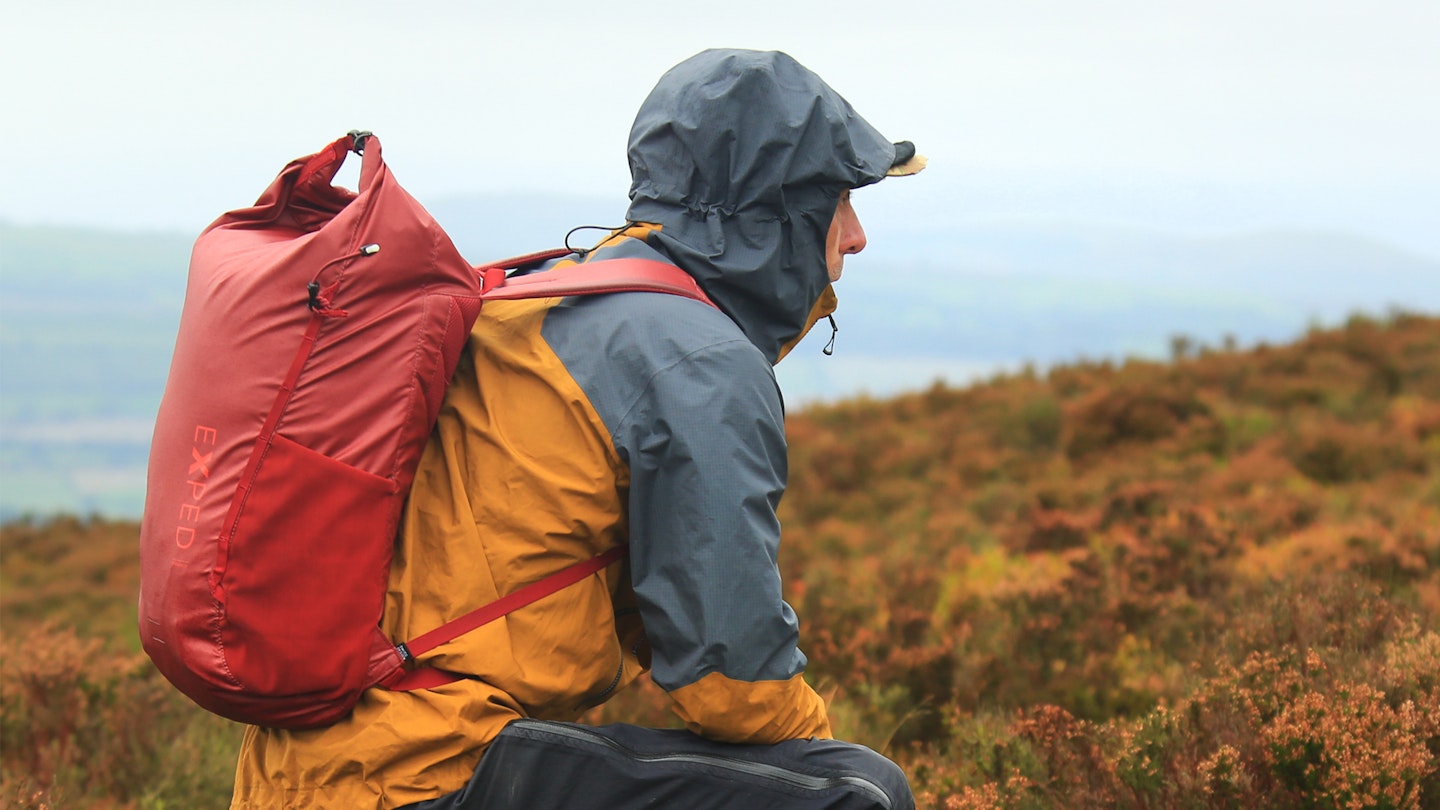
Waterproof backpacks can be lifesavers. The last thing you want is your personal belongings inside your backpack to get soaked and damaged. And if you’re like most people, you carry valuable and expensive items in your bag, so it’s important to keep them away from water.
We have tested every backpack we could get our hands on, and put them through a series of wet tests to see how they held up to water. Would they keep a computer dry? Your jacket? Papers? And were they comfortable?
Here is what we found.
Quick Comparison: Our Top Waterproof Backpack Picks
Backpack | Best For | Volume | Key Material | Price Range |
Patagonia Black Hole 25L | Hiking / Day Trips | 25L | Recycled polyester with DWR coating | $$ |
SealLine Black Canyon 65L | Travel / Multi-day Trips | 65L | 600D polyurethane-coated polyester | $$$ |
Yeti Panga 28L | College Students | 28L | High-density nylon with TPU laminate | $$$ |
Chrome Bravo 3.0 | Laptop / Work Commute | 22L | Waterproof outer with waterproof sleeve | $$ |
eBags Professional Slim | Large Laptop Users | 25L | Water-resistant nylon | $ |
Price ranges: $ = under $100, $$ = $100-$200, $$$ = $200+
What to look for in a waterproof backpack
There are many factors to consider when shopping for a waterproof backpack. You should never read a description that says “waterproof” and assume the bag is going to be impermeable to water. A good, reliable waterproof backpack should have a few key qualities. Here are some important factors you need to consider:
Material
Many waterproof backpacks are made of water-resistant material, which is different from waterproof material. Water-resistant backpacks are not going to keep your belongings 100% safe from water damage. You should look for backpacks made of waterproof fabrics such as mid to high denier polyester, nylon, and PVC Fabric. These types of bags are dense and provide a durable exterior coating that allows your bag to stay dry no matter how soaked the bag gets.
Just like with other gear, like your raincoat or your hiking boots, if you need true waterproofing, insist on it and don’t settle.
It is also worth noting that seams and zippers are often the weak points in an otherwise waterproof backpack. Look for bags with welded or taped seams rather than stitched ones, and consider whether the zippers are water-resistant or fully waterproof. A bag made from excellent waterproof fabric can still let water in through a poorly constructed zipper during a heavy downpour. The best manufacturers think about every single entry point for water, not just the main fabric panels.
Size
Depending on the type of activity or event you’re attending, you’ll want a waterproof backpack that isn’t too large or too small. Ideally, you’ll want a bag that provides you with maximize functionality while being relatively small in size. The smaller the bag is, the more comfortable it’ll be to carry on your back. Backpacks are generally measured using packing volume in liters. For reference, 15-30L backpacks are best for students and day hikes, 30-50L for 1-2 night trips, 45-55L for 2-3 night trips, and 55L+ for over trips longer than 3 nights.
Functionality
In terms of functionality, you should look for a backpack that can do it all – it should be able to accommodate all your personal needs. This may include having multiple storage compartments, zipper compartments, interior waterproof compartments, water bottle pockets, dividers, and so on. Keep in mind that the functionality of a backpack is subjective — some people want a complex layout of pockets and zippers, others prefer the more basic ruckpack backpack style.
Think also about how the backpack opens. Roll-top closures provide excellent waterproofing but can be slower to access. Traditional zipper tops are more convenient but require high-quality waterproof zippers to maintain full protection. Some packs combine both systems, giving you quick-access pockets for everyday items and a sealed main compartment for valuables. Knowing how you tend to use a bag throughout the day can help you pick the right opening system.
Comfortability
One of the most important factors to consider is comfortability. No matter how functional or durable a backpack may be, it must be comfortable to wear. If you’re investing money into a waterproof backpack, it means that you plan on traveling by foot. Therefore, the backpack needs to rest well on your shoulders, be as ergonomic as possible, and not having any weird and pointy objects stabbing into your back.
Look for padded shoulder straps that are wide enough to distribute weight evenly. A sternum strap and a hipbelt can make a significant difference on longer carries because they shift some of the load from your shoulders to your core, where your body handles weight much more efficiently. Back panels with ventilation channels are also a nice bonus, since waterproof materials don’t breathe the same way that mesh panels do on traditional hiking packs.
It is not a bad idea to treat your backpack with a waterproofing spray, just to reinforce the water-resistant qualities of the fabric. We recommend doing it yearly during the entire life of the backpack. Nikwax Tent and Gear SolarProof and Gear Aid Revivex are both solid options for this kind of maintenance and are available at most outdoor retailers.
What to avoid in a waterproof backpack
Now that you know what to look for in a waterproof backpack, here are some things you should avoid:
Non-adjustable shoulder and waist straps
Having adjustable straps is important for any backpack because it allows you to customize the fit until it feels comfortable to wear. If there are no adjustable shoulder and waist straps, it’s best to keep looking around. You should also keep in mind that many backpacks do not come with waist straps, as they’re not completely necessary for lighter loads, but they become increasingly important the more weight you plan to carry.
Poor design
If you find a backpack that’s durable but has poor design and functionality, you’ll want to consider a different bag. An example of a poorly designed backpack is one with a compartment located directly at the back of the bag. This type of bag is practically inviting people to steal from you. Another example of a poorly designed bag is one that’s difficult or takes too long to open. You should be able to access your bag in a matter of seconds.
Poor design can also show up in subtle ways. Straps that are too narrow and dig into your shoulders after an hour of walking, water bottle pockets that are too tight to use with one hand, or laptop sleeves that are not padded enough are all signs that the manufacturer didn’t spend enough time thinking about real-world use.
Heavy base-weight
Since you’ll be traveling around on foot with your backpack, you’ll want to avoid purchasing one that feels heavy before you even put anything in it. Carrying a heavy bag is bad for your posture, and it could lead to back injuries over time. Waterproof materials can sometimes add weight compared to standard nylon, so pay attention to the listed weight of any bag you’re considering. A good waterproof pack should strike a balance between protection and portability.
Low-functionality
This may vary depending on what you plan on using the backpack for. An example of a waterproof backpack with low functionality could be one that only has one compartment upon opening the bag, with no additional compartments, zippers, or pockets to pack and separate your belongings. Again, the best backpacks are ones that are relatively small in size while providing the most functionality to meet your needs.
Suspect waterproofing
This is where reading the label and manufacturer’s claims will be important. Words make a difference. Something that is waterproof should be impervious to water due to the materials and construction of the pack. The next best is a product that is water-repellent, as it has probably been treated and should be quite waterproof until the treatment inevitably wears off. Last in line is something that is water-resistant, meaning the manufacturer made efforts to have the pack resist water, but it is definitely not waterproof.
Finally, we would just mention that you are going to spend some money on a good waterproof backpack. Sure, you can get something that says “water resistant” on it, but will the $80 you save really be worth it when your books are ruined in a rainstorm, or your laptop damaged from a spill on the subway, or your dry change of clothes are soaked when you slip into a stream on your hike?
Best Waterproof Backpack for Hiking: Patagonia Black Hole 25L
This is our favorite waterproof backpack of any type, anywhere. We love it.
Hiking with a backpack in wet conditions poses a challenge: There is a good chance that the contents of your pack are meant to stay dry. If you plan on hiking, one of the best backpacks available on the market is the Patagonia Black Hole. You can check it out and purchase it directly from Peter Glenn. It comes in four colors, good selection for a backpack lineup. Here’s why this backpack is the perfect waterproof option for hiking: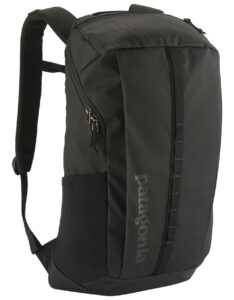
- Packing volume and functionality. As mentioned earlier, the bag is 25L which is best for day hikes. However, if you plan on doing an overnight hike, there are larger options available such as the 40L Patagonia Black Hole Duffel Bag which can also be worn as a backpack. The functionality of this bag is superior compared to other waterproof backpacks. There’s a laptop compartment, large main pocket for your big and bulky items, small stash pockets for your essential items and documents, internal mesh pocket with a key keeper and organizer panel, 4 exterior pockets, and even more! Hiking with this bag will allow you to bring everything you need at the best convenience, and the larger 40L one might even be big enough to cram a smaller tent inside.
- Durability. This bag is made of an eco-friendly polyester that’s been blue sign approved. It’s completely waterproof, great for the environment, and will last for many years if you take care of it. After several years of use, most users still consider the pack to be like-new…. not major tears in the fabric, and the seams hold tight even if you have been carrying heavy loads.
- Comfort. In addition to being durable, the Black Hole backpack also has padded shoulder straps and a molded back panel to wick away moisture and allow air to flow across your back. This will allow you to carry the backpack all day while providing maximum comfort.It’s not cheap, but it is a backpack you probably won’t throw out after a couple of years. This will be one of your go-to packs for years and years.
Best Waterproof Backpack for Travel: SealLine Black Canyon 65L
Let’s say you are headed to England for a week, and plan to roam around and see various regions. Well, England can be a bit rainy, and you probably will want a pack that has some capacity.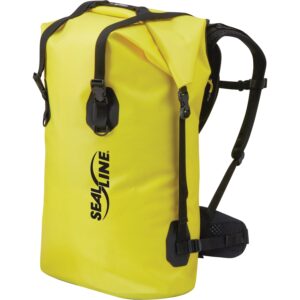
One of the most common reasons why people are looking to buy a waterproof backpack is for traveling. It doesn’t matter where you’re traveling, whether it be in another country, to a friend’s house, or to a cottage, a waterproof backpack is perfect for any destination. The Patagonia we write about above would also make a great travel backpack, but another one of the best backpacks for traveling is the SealLine Black Canyon 65L which can also be purchased from REI. We love it, and can vouch for the fact that it is, in fact, waterproof. Here are some key features:
- Durability. The SealLine Black Canyon is made of 600-denier polyurethane-coated polyester which is completely waterproof and extremely durable. With adequate care, this bag can last you a lifetime.
- Functionality and comfortability. This bag is perfect for any wet adventure as it has a roll-top closure that allows you to completely seal and protect your belongings from water and thieves. You can also secure your accessories to the backpack using the lash points found on the sides. The integrated suspension system can support a moderate load of weight while the side compression straps are very effective in helping to stabilize things when you need to be on the move. To supplement the functionality, the bag’s also extremely comfortable to wear as it comes with padded shoulder straps, a hipbelt, and lumbar area. It’s completely adjustable, so it’s great for travel.
Why 65L works for travel. When you’re traveling for a week or more, you need space not just for clothing but for all the things you accumulate along the way. The 65L capacity gives you room for a packable rain jacket, a few days of clothing, toiletries, a pair of shoes, and still have space left over. The roll-top design also gives you some flexibility here. You can cinch it down tighter when you’re carrying less, and open it up when you need every last liter of space.
Best Waterproof Backpack for College Students: Yeti Panga 28L
For college students who have to walk outside to their classes, the bus stop, or to home, the Yeti Panga Pack (find it here) is the best selection. The clean-looking pack is going to give you a super functional and tough pack that can keep things relatively safe in a rain show.
If you are a college student, you likely have a combination of electronics and papers in your pack that really need to stay dry. Here is what we like about the Yeti.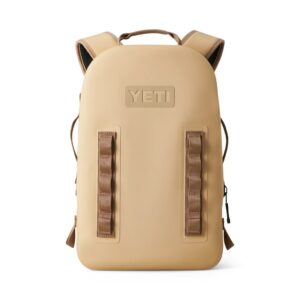
- Size and weight. Most college students have to walk long distances to get to their destinations. That’s why this 28L, 4lb bag works perfectly. 28L is more than enough packing capacity for the average college student who carries a laptop, textbook, pencil case, and a few other school necessities.
- Design. While it is not a dedicated computer bag, a good internal organization and an internal sleeve make it versatile enough to carry a tablet or laptop inside when needed. It has a nice, minimalist look that we really like. It doesn’t scream “outdoor gear” on campus, which matters to a lot of students who want something that looks appropriate in a lecture hall and also holds up in a sudden downpour on the walk home.
- Durability and comfortability. The Yeti Panga is made of high-density nylon with thermoplastic urethane lamination, designed to resist punctures, abrasion, and stay dry even when it’s being soaked with water. The bag has DryHaul shoulder straps which are ergonomic, and this is critical for students who walk daily. There’s also a removable chest strap and hipbelt to provide maximum comfort and stability throughout the day.
Best Waterproof Backpack for Laptops: Chrome Bravo 3.0
The best backpacks for laptops share a lot of similarities for the best backpack for students, which we just wrote about above. Carrying a laptop requires a special set of features, such as a compartment that has some level of padding, a place for cords and peripheries, and at least some level of water-resistant material in case you find yourself in a rainstorm or spilling a drink on the backpack.
Some of the laptop bag makers also make backpacks, and we tend to go with their products, instead of the traditional outdoors companies, just because their products are so built-for-purpose. They start with the laptop, and build the backpack around it….. rather than trying to build any kind of all-purpose backpack that happens to have a laptop compartment. That means that popular brands like Targus, Samsonite, and eBags (among others) make the short list.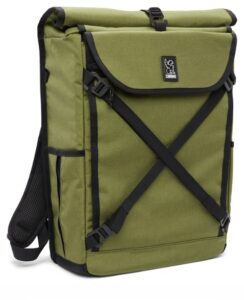
For a great waterproof laptop backpack, we go with the Chrome brand. The Chrome Bravo 3.0 (find it here), an amazingly waterproofed backpack that has an excellent look, suitable for a business meeting. The only downside is that is carries up to a 15 inch laptop, not big enough for people who rely on larger-sized laptops. But for those of us who carry around standard-issue or more compact laptops, this is a clear winner.
- Waterproof outer, plus a waterproof sleeve, giving you double protection for your valuable laptop.
- Professional look. An attractive, dark aesthetic that will not be out of place in a formal setting.
- Work storage. Plenty of pockets for papers, chargers, and accessories.
- Comfort. Very comfortable shoulder straps that hold up through a full workday of commuting.
Now, if you need to carry a 17-inch laptop, we have a favorite but it is NOT waterproof, just water resistant. The Ebags Professional Slim available on Amazon. You won’t spend as much on it because it is not waterproof, and it might not last as long as the Chrome, but it provides a solid option for larger laptops. If you don’t need the larger capacity, however, the Chrome is the better bag.
A Note on Waterproofing Sprays and Long-Term Maintenance
No matter which waterproof backpack you choose, keeping up with maintenance will extend its life considerably. Even truly waterproof bags benefit from occasional treatment, especially around zippers and seams that see heavy use. A DWR (durable water repellent) treatment spray like Nikwax Fabric and Leather Proof or McNett Gear Aid Revivex Water Repellent can refresh the outer surface of your pack and restore beading performance after a season of heavy use. Apply it after cleaning your bag, and let it dry fully before packing it up.
You should also rinse your pack with clean water after exposing it to saltwater or heavy mud, as both can degrade materials over time. Store it in a dry, cool place out of direct sunlight, since UV exposure can break down waterproof coatings on even the best bags. These are small habits that can add years of solid performance to any pack on this list.
More Backpacking Content
While these are our favorite 4 waterproof and water-repelling backpacks, there are hundreds of good packs on the market. If you are looking for a built-for-purpose backpack, such as a fishing backpack, we have you covered too.
Frequently Asked Questions
What is the difference between waterproof and water-resistant backpacks?
This is probably the most common question we get, and it’s worth taking seriously. A waterproof backpack uses materials and construction methods that are completely impervious to water. Think sealed seams, welded panels, and waterproof zippers or roll-top closures. A water-resistant backpack, on the other hand, is made of materials that can shed light rain or moisture for a short period, but they will eventually allow water through, especially at seams, zippers, and stress points. If you are hiking in heavy rain, crossing streams, or traveling through genuinely wet climates, only a waterproof bag will give you real peace of mind.
Can I make my existing backpack waterproof?
You can significantly improve the water resistance of your existing backpack with a few simple steps. A DWR spray like Nikwax TX.Direct or Gear Aid Revivex can be applied to the outer fabric and will cause water to bead and roll off rather than soak through. For extra protection, a pack rain cover, which is a fitted cover that slips over the entire backpack, is a cheap and effective option. Many hiking packs actually include one. You can also use a dry bag liner inside your pack to protect the contents even if the outer shell gets soaked. None of these solutions are as reliable as a purpose-built waterproof pack, but they can do a reasonable job for light to moderate rain.
How do I clean a waterproof backpack without damaging the waterproofing?
Use a mild soap or a product specifically made for technical outdoor fabrics, such as Nikwax Tech Wash. Avoid using regular laundry detergent, bleach, or fabric softener, as these can strip or clog the DWR coating on the outer fabric. Hand washing is usually preferred over machine washing, though some packs can handle a gentle machine cycle in a front-loading washer. Check the manufacturer’s care instructions before putting your pack in the wash. After cleaning, let the bag air dry fully before storing it.
How many liters do I actually need in a backpack?
This depends entirely on what you’re doing. For a daily commute or a college student carrying books and a laptop, 20-28L is usually plenty. For a day hike where you need water, snacks, layers, and a first aid kit, 25-35L works well. For a weekend camping trip where you need sleeping gear, food, and a change of clothes, you’re looking at 40-65L. Going longer than three nights generally requires 65L or more, especially if you’re carrying your own shelter and sleep system. A good rule of thumb is to pack everything you think you need, measure the total volume, and then add about 10% for breathing room.
Are expensive waterproof backpacks worth it?
In most cases, yes. A cheap “waterproof” bag often uses that word loosely, and the construction quality tends to reflect the price. Seams fail, zippers leak, and the coatings wear off faster. A well-made pack from a brand like Patagonia, SealLine, Yeti, or Chrome is built to a higher standard and backed by better warranties. If you are protecting electronics, important documents, or gear for an activity where staying dry is critical, the price difference is easy to justify. That said, if you only need occasional light rain protection for a quick commute, a quality water-resistant bag and a pack cover might serve you just as well for less money.
What should I look for in a waterproof backpack for commuting?
For commuting, you want something that strikes a balance between professional appearance and performance. The Chrome Bravo 3.0 is a great example because it doesn’t look like a hiking pack but still offers real waterproof protection. Key features to look for in a commuter pack include a padded laptop sleeve, organizational pockets for smaller items, comfortable shoulder straps that hold up through a crowded subway ride, and a profile that isn’t so bulky that it becomes difficult to manage in tight spaces. Waterproof zippers or a roll-top closure are important here because commuters tend to access their bags quickly and frequently throughout the day.
Do waterproof backpacks work when fully submerged?
Most waterproof backpacks are not designed for full submersion. They are built to handle heavy rain, splashing, and brief exposure to wet surfaces, but sustained underwater pressure is a different challenge. If you need a bag that can genuinely be submerged, look for products that are specifically rated for submersion, often described as “dry bags” rather than backpacks. Products from brands like SealLine, ORTLIEB, and Aqua Quest are designed for paddling and water sports where submersion is a real possibility. For most land-based activities, a well-made waterproof backpack will handle anything the weather throws at it.