
When it comes to camping or RVing, one of the most important things to think about is your propane supply. Without propane, it’s much harder to cook meals, heat water, and stay warm on cool nights. That’s why it’s worth taking the time to choose the right refillable tank for your needs. In this updated guide, we’ll walk through how to use propane safely, how to refill it properly, and which refillable propane tanks have become the top picks for 2026 campers and RV owners.
Quick Comparison: Best Refillable Propane Tanks (2026)
Model | Capacity | Weight (Empty) | Highlights | Best For |
Ignik Gas Growler Deluxe+ | 4.5 L / 1.2 gal | 10 lbs | Insulated case, DOT‑approved, eco‑friendly | Multi‑day trips |
Flame King 1 lb Refillable Kit | 16.4 oz | <1 lb | Compact, refillable, rust‑resistant | Short trips |
Manchester Tank 20 lb | 4.7 gal | 17 lbs | Steel body, OPD valve, reliable | RVs & grills |
Worthington 11 lb Aluminum | 2.6 gal | 12.5 lbs | Lightweight, corrosion‑proof | Boats & RVs |
How to Use Any Propane Tanks Safely

Before diving into the best refillable propane tanks, let’s go over a few essential safety tips. These habits not only protect you but also ensure your propane lasts longer and works more efficiently:
- Store propane tanks outside in a well-ventilated area. Never keep them inside your RV, car, or tent.
- Double-check the valve position before and after each use. Make sure the tank is turned off completely.
- Check the expiration date stamped on the collar of the tank. Most DOT-certified tanks are safe to use for about 12 years from manufacture.
- Read the manufacturer’s instructions carefully before using a tank or refill kit for the first time. Each brand can have slight variations in attachment design or refill specs.
- Avoid leaving tanks empty, as air and moisture can cause internal rust or create unsafe pressure conditions.
- Properly dispose of expired or damaged tanks at a certified hazardous waste facility or exchange center. Never toss them in the regular trash.
If you follow these basic rules, you’ll keep your gear reliable and your campsite safer for everyone.
How to Refill Propane Tanks

First, make absolutely sure your tank is refillable. Disposable cylinders are single-use and should be recycled properly once empty. Refillable tanks are labeled accordingly and usually have a refillable valve assembly.
When it’s time to refill:
- Find a refill station. RV parks, campgrounds, and many gas stations offer propane refills. Apps like “FindPropane” (new in 2025, community-rated refill locator) or even Google Maps can help identify nearby refilling spots.
- Prepare the tank. Turn the valve off completely and remove the protective cap.
- Attach the station adapter securely before starting the refill.
- Refill slowly to avoid air pockets and ensure the propane settles evenly.
- Disconnect carefully once the tank is full, then replace the cap tightly.
To check for leaks, spray a small amount of soapy water around the valve and connections. If you see bubbles forming, you’ve got a leak that needs fixing before use.
Best Refillable Propane Tanks for Camping or RV’ing
Ignik Gas Growler Deluxe+ (2025 Edition) 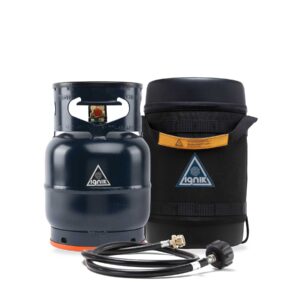
Ignik improved a solid favorite with sturdier hose fittings and a slightly more compact insulated case. It still holds up to 4.5 liters (roughly 1.2 gallons) of propane—enough for several days of running a two-burner stove or small heater. The padded case helps stabilize the tank and retains pressure better in cold weather, a perk that winter campers love.
Safety-wise, it’s still DOT-approved and easily refilled at most stations. It weighs about ten pounds empty, but thanks to the new model’s improved handle and case design, it’s easy to carry. Refilling it costs roughly the same as buying a single-use tank, so it pays for itself quickly while keeping more cylinders out of landfills.
Flame King 1 lb Refillable Cylinder & Kit
This compact 16.4-ounce cylinder is a crowd favorite among backpackers and car campers in 2026. Made from sturdy powder-coated steel, it is DOT-certified and fully refillable when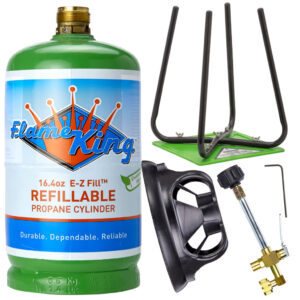 used with the Flame King refill kit. The latest version includes a faster-sealing valve and an improved safety cap that minimizes accidental leaks.
If you often cook short meals over the weekend, two of these are perfect companions. They refill fast, and since they can last up to 12 years, they’re an eco-friendly and budget-savvy upgrade from disposables.
These work great with our favorite camping stoves.
Manchester Tank 20 lb Steel DOT Cylinder 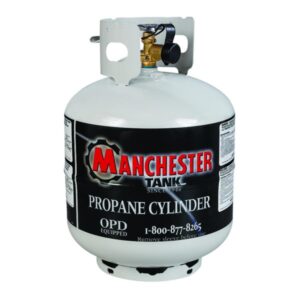
A classic that remains the standard size for most RVs and BBQ setups. This 20 lb model features rugged steel construction, an OPD (overfill prevention device), and a corrosion-resistant coating. It’s the same reliable workhorse now updated with a more accurate gauge for monitoring fuel level—an update welcomed by RV owners who like knowing exactly how much cooking or heating time they have left.
Worthington ProGrade 11 lb Aluminum Tank
For campers who value lighter gear, the Worthington Aluminum series continues to be a favorite. 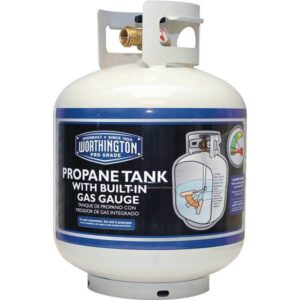 At roughly 12.5 pounds empty, it’s noticeably easier to handle than steel models. The aluminum build also means no rust, making it ideal for coastal campers, sailors, and long-term RVers looking for durable portability.
Go Solar Too
If you’re camping regularly and using propane for your stove or heaters, it might be time to combine your fuel system with solar power. Portable fold-up solar panels (typically 100–200W units) can handle lighting and charging tasks, leaving propane for cooking and heating. This combo setup saves money and reduces your carbon footprint.
It’s a strategy more campers are using by 2026—propane for essentials, solar for everything else. It’s clean, practical, and a little bit futuristic, in the best way.
FAQs
1. How can I tell when my propane tank is running low?
Many tanks include built-in gauges, but you can also pour warm (not boiling) water down the side of your tank and feel for the temperature change. The propane level shows up as the cool area where gas still sits inside.
2. Can I refill disposable tanks using adapters?
Technically it’s possible with certain third-party adapters, but it’s not considered safe or permitted under DOT regulations. Always use certified refillable tanks designed for reuse.
3. How often should I inspect or replace my propane tank?
Check your tank before each trip for rust, leaks, or valve damage. Replace it when it reaches its expiration date or any time you notice corrosion or a damaged valve.
4. Are aluminum tanks worth the higher upfront price?
Yes if weight and durability matter to you. Aluminum tanks resist rust and are easier to move, especially if you camp frequently near water or humid areas.
5. What’s the most economical propane size for a weekend trip?
For short outings, one or two 1 lb refillable cylinders or a single 4.5 L tank are usually enough. You’ll save money over time versus buying multiple disposable canisters.