
Hunters should get themselves fully prepared before heading out, and nothing ruins a hunt like having sore or wet feet. Since hunting normally involves lots of walking, footwear is critical to a good experience, and built-for-purpose hunting boots are normally the natural choice.
Resist the urge to wear normal hiking boots. Hiking boots can be great if conditions are perfect, but when hunting you are likely to encounter rocks, snow, mud, water, and possible cold temps.
Hunters can choose boots based on a number of factors: the material of the boots, the season, temperatures, and the hunting area and terrain. Before we dive into our top picks, here is a quick reference guide to help you match the right boot to your specific hunting situation.
Boot
Pros
Cons
Price Check
Irish Setter Vaprtrek

-
Lightweight
-
Great when you need to move around
-
Not as warm
-
Lower calf coverage

Cabela Iron Ridge

-
Great look
-
Super tough shank
-
Good but not great in fridid temps
-
Expensive
LaCrosse Alphaburly Pro

-
Best on our list for very wet conditions
-
High calf coverage
-
Not as breathable
-
Overkill for dry conditions
Cabela Meindl Perfekt

-
Attractive leather
-
Extremely comfortable fit for most feet
-
Can be harder to find
-
Expensive
Danner Pronghorn Realtree

-
Great fit
-
Ideal for dry, upland bird hunting
-
Spendy
-
Not first choice for wet fields


Danner Men’s Pronghorn GORE-TEX Hunting Boots
Best for Lots of Walking

For all types of terrains, the Pronghorn GORE-TEX can be a hunter’s first choice. They can always handle unpredictable environments while out and about. High-quality leather, dual-texture, and a camouflage pattern fabric are used to make this a great combination of good construction and attractive footwear.
We have used these boots for upland bird hunting, which often include trudging through some swamps and ditches, and the boots are both comfortable and dry. They aren’t cheap, but you are going to be getting a quality boot with these Danners.
The Pronghorns feature a combination of GORE-TEX and TERRA FORCE® NEXT™ foot platform, making for a trusted combination of source materials. We love the 8 inch height, which is ideal for many hunting spots, but perhaps a touch short if you are going to be mainly in long grass.
The boots are ideal for warm, drier conditions, and while they can handle some water, if you’re hitting swamps, we might recommend something like the Alphaburly below.
One thing that sets the Pronghorn apart from many competitors in the same price range is the quality of the sole construction. The lug pattern grips well on both wet rock and loose dirt, which makes them a reliable choice whether you are working a hillside or following a creek bottom. Hunters who cover a lot of ground in a single day will appreciate just how well the boot holds its shape and support late in the afternoon when fatigue starts to set in.
Pros:
- Comfortable for nearly all feet
- Quickly molds to your foot and arch
- Great for upland bird hunting
Cons:
- Expensive
- Waterproof but not good to fully submerge
Irish Setter Men’s Vaprtrek Waterproof 8 Inch
Best Lightweight Boot
Weighing about 40% less than other hunting boots, the Vaprtrek boots are great if lightweight footwear is a priority. The weather won’t stop you with these boots, as the ultra-dry waterproofing system will keep hunter’s feet totally dry all the time in any damp or shallow environment. For that matter, the Irish Setters might also be a good fit even when you are not hunting and just need a good all-around waterproof hiking boot for your trek.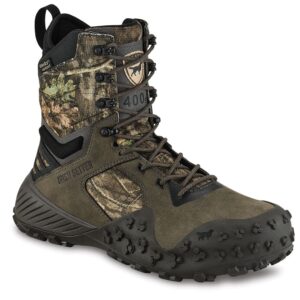
When we think lightweight boots, we think upland bird hunting in dry conditions. Running after a dog that is chasing a pheasant is when a lightweight boot really excels.
A nice boot that is a little lower on the leg – it rises about 7 inches vs. the 10+ on many of the other boots – they double very well as an outdoor work boot. (Irish Setter also makes a higher calf Vaprtrek boot designed for high-risk snake areas). If you want to use them for landscaping or farm activities, they shoot up the list in our opinion. You just might want to think twice about using them in situations where you could be walking through soggy ditches or standing water, given the lower calf profile.
The RPM composite technology used in the Vaprtrek construction is worth mentioning specifically. It replaces the traditional heavy midsole with a lighter, more responsive material that still delivers solid underfoot protection. For hunters covering miles of open field or prairie, your knees will thank you at the end of the day.
Pros:
- Lightweight
- Great for situations where you might find yourself running or climbing rocky terrain
Cons:
- Not our top choice for swampy or wet conditions
Cabela’s All-Leather Iron Ridge Hunting Boots with GORE-TEX
Best All-Around
Another awesome, durable hunting boot from Cabela’s, this option is completely suitable for any hunting adventure in any season. They provide you with a 100% waterproof hunting trip with GORE-TEX lining and keep the rain or snow away from your feet. The exterior is made of waterproof, richly oiled, full grain leather. Cabela’s knows hunting, and that proves true in everything from their boots to firearm selection to hunting optics.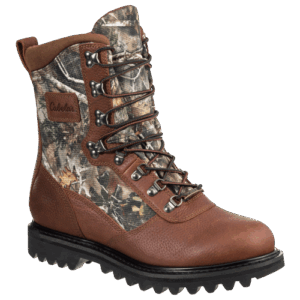
We love the strength of the steel shank, which makes this boot a top choice if you find yourself walking on uneven or rocky ground or covering terrain that has downed brush or other debris.
Testers note that the boots fit and feel great right out of the box, so you likely won’t have to be too careful about how you break them in. The insulation is probably in the medium range, but with the right socks you will be warm down to potentially the single digit temps.
The rich leather is the perfect material to coat with a good boot waterproofing spray. The combo of the quality leather and the waterproofing will make this a reliable boot even when you need to trek through some mud.
If you are hunting whitetail in the Midwest or mule deer in the mountain west, this boot covers a wide range of scenarios well. The taller profile also helps with ankle support when navigating deadfall or loose rock, which is something hunters tend to underappreciate until they roll an ankle miles from the truck.
Overall, this is one of the better all-purpose hunting boots we have tried. They look great too.
Pros:
- Great looking boot. You might wear these even when not in the field.
- Very strong shank. The boots we would want on if we stepped on a nail.
- Extremely versatile.
Cons:
- Insulation is good but not great. Will need heavy socks if in super cold conditions.
- Expensive.
LaCrosse Alphaburly Pro Insulated Hunting Boots
Best for wet conditions
Do you need to keep water and moisture off your feet, ankles, and shins? This is your boot.
The Alphaburly Pro 18 1000 is not for people on a tight budget, but is great for someone who needs a tough boot for cold and wet conditions. The combination of neoprene (like the material used in wetsuits) and rubber makes a it perfect in wet elements such as duck hunting or crossing a bog.
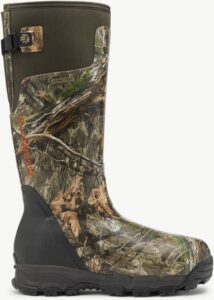
What we like about these is the high leg coverage. You get 16 inches of solid coverage up the leg, and, without any tongue or laces to speak of, there is really no way for water to get in unless you happen to completely immerse the boot. Where they really excel is when walking in tall, wet grass. A gusset on the shin allows for you to adjust the tightness of the boot so they stay comfortable.
The insulation will help you stay warm, and we like that the neoprene/insulation system focuses on making the boots breathable so your feet don’t sweat. The boots performed well when walking on rugged terrain, which was a pleasant surprise given that they look a bit clunky.
When we have used these boots, it has been for waterfowl hunting or big game hunting in wet conditions (some years are wetter than others — you just never know the hand you will be dealt). They excel when you are in the muck and swamp. We also think they would be a good ice fishing boot, but haven’t tried them for that.
Duck hunters in particular tend to be loyal to the Alphaburly once they have tried it. Standing in a flooded timber hole or a pit blind in a rice field for hours at a stretch is a real test of any boot, and these hold up where others give out. The 1000 gram insulation rating is meaningful in those pre-dawn situations where temperatures are sitting in the teens and the wind is coming off the water.
Overall, these hunting boots are great for foul conditions, walking in long, wet, grass, and basically any condition that is not hot, dry, and rocky.
Pros:
- Super waterproof. The most watertight boot we reviewed.
- High calf coverage. Hard to step in water too deep for these boots, great for wet conditions.
- Love the cinch at the top that fastens the boot to your calf.
Cons:
- Not as breathable when in warmer or dry conditions
- Not our top choice if walking over lots of dry ground
Men’s Crispi Nevada GTX Hunting Boots

Men’s Crispi Nevada GTX Hunting Boots are a favorite among hunters. They can be a bit on the expensive side, so you have to consider it a long-term investment. The boots have a GORE-TEX water proof lining, Vibran outsole for improved grip and stability, a frame that absorbs shock, and a removable Air Mesh footbed.
Although these boots are non-insulated, they have a dual tech lining for breathability and anti-odor. They’re also great for other activities like hiking and backpacking, and thanks to their design, help prevent ankles from rolling even on uneven terrain.
Crispi Nevada GTX Hunting Boots are also well known for being comfortable straight out of the box — they don’t take long to break in at all!
The Crispi Nevada is probably the boot on this list that most appeals to the backcountry or western hunter. If you are packing into elk country in September or chasing mule deer across open ridges, the combination of the Vibram sole and the supportive upper gives you real confidence on loose shale and steep side-hills. The non-insulated design also makes them a good warm-season mountain boot that won’t cook your feet on a long approach hike.
Pros:
- Extremely comfortable
- Supportive even for longer hunts and hikes
- Durable
Cons:
- Expensive
Find here.






Buy Meindl from those who sell Meindl products. It is a lesson in frustration looking for Cabela’s Meindl Perfect. Meindl makes great boots!
Great point, Bruce. Meindl hunting boots are outstanding, and in the end probably best to buy them direct from a Meindl dealer.