
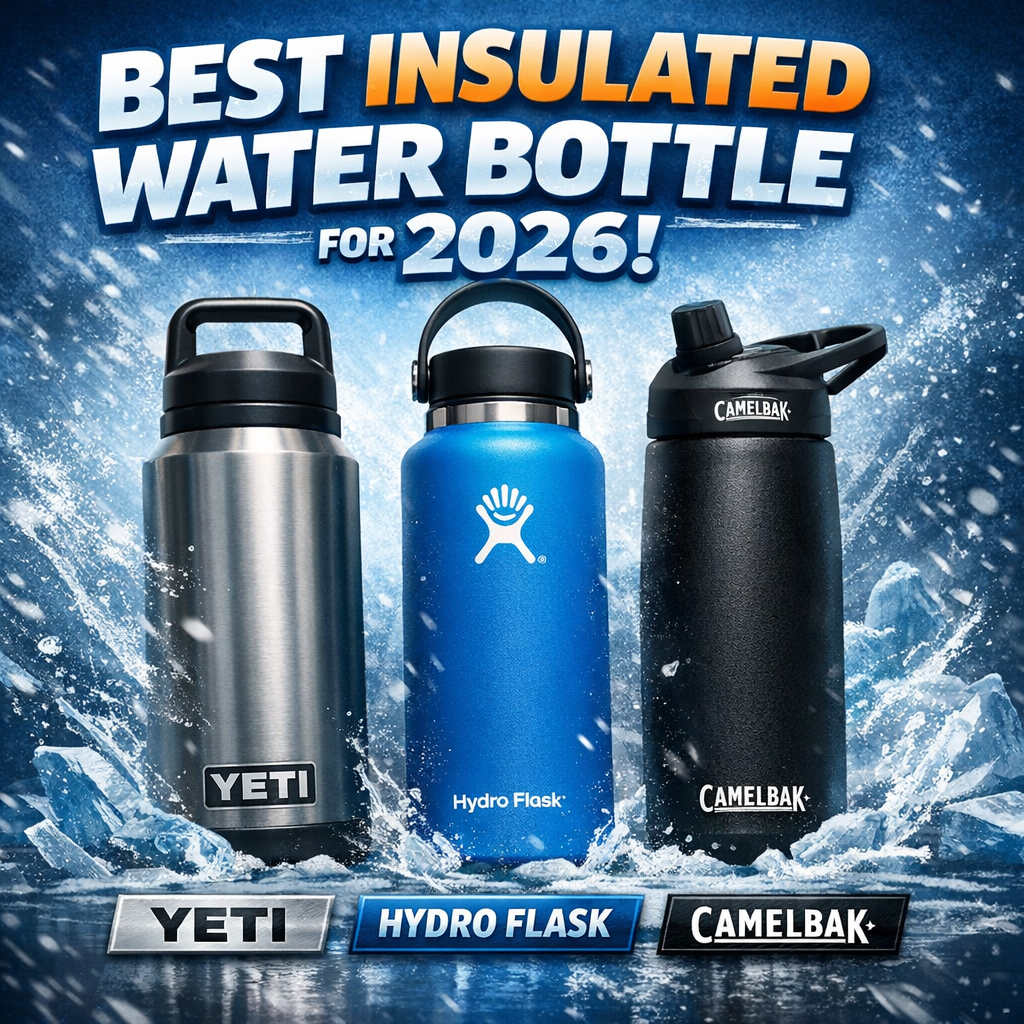
The market for water bottles, tumblers, and flasks has exploded in recent years, and the quality of products has taken a big step forward. The days of plain, plastic water bottles are going away. Instead, high-quality, BPA-free, insulated bottles are becoming the new norm. These are bottles that, if cared for properly, will last you for a long, long time.
Whether you are getting a bottle for hiking, a long endurance run, or just staying hydrated throughout the day, different bottles fit best for different situations. The three brands we compare below are our go-to bottles for many of those situations.
When it comes to higher-end water bottles, we wanted to compare three of the brands that seem to have great traction and lots of buzz: Camelbak, Yeti, and Hydro Flask. We want to give you our opinion of which bottles work best, stand up to repeated use, and provide the best insulation performance.
QUICK-GLANCE COMPARISON TABLE
Feature | Camelbak | Hydro Flask | Yeti |
Founded | 1988 | 2009 | 2006 |
Primary Material | BPA-free plastic (soft-sided); some stainless options | 18/8 stainless steel (hard-sided) | 18/8 stainless steel (hard-sided) |
Insulation Type | Dual-wall (select models) | TempShield double-wall vacuum | Double-wall vacuum |
Cold Retention (approx.) | Up to 4 hours (insulated models) | Up to 24 hours | Up to 24+ hours |
Hot Retention (approx.) | Not a primary feature | Up to 12 hours | Up to 12 hours |
Dishwasher Safe | Most models, top rack | Most newer models, top rack | Yes, all bottles |
Warranty | Got Your Bak lifetime guarantee | Limited lifetime warranty | 5-year limited warranty |
Weight (typical 20–24 oz model) | 5–6 oz (soft-sided) | 12 oz | 13 oz |
Best Suited For | Cycling, running, gym | All-purpose, hiking, gym | Rugged outdoor use, travel, hiking |
Cup-Holder Friendly | Yes (most models) | Yes (most standard-mouth models) | Some models; larger sizes may not fit |
Average Price Range (20–24 oz) | $12–$18 | $30–$40 | $30–$45 |
Color/Finish Options | Moderate selection | Wide selection, seasonal drops | Growing selection, limited-edition colors |
CAMELBAK BOTTLES
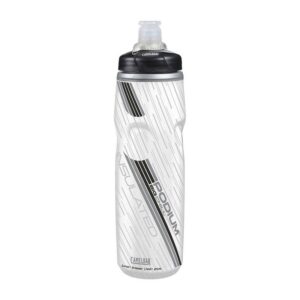
Camelbak Podium Big Chill 25. Tops for cycling.
Known just as much for their hydrating backpacks as their water bottles, the Camelbak brand is one of the more popular brands on the market today. In business since 1988, they have stood the test of time as a maker of hydration products. Camelbak was originally borne out of the loyal cycling community (the genesis group for many new mainstream products) when the founder, an EMT, decided to use a rigged-out IV pouch for hydration. They perfected the concept, grew, and today are a well-known brand carried by most major retailers.
These are soft-sided bottles. Not as durable as the next two brands we will feature, but great for running or cycling. For a short trail run, this can be a good option if you don’t mind running with a bottle in your hand. In recent years, Camelbak has also pushed further into stainless steel and insulated territory with lines like the Chute Mag Vacuum, which gives them a more direct competitor to Hydro Flask and Yeti for people who want that hard-sided durability with the Camelbak name they trust.
- Pros: Soft-sided, much better suited for hard bottle holders. Best choice for cyclists. Easier to use while moving. Lightweight compared to stainless competitors.
- Cons: Not as durable for activities like rugged hiking or scrambling. Insulation does not match Hydro Flask or Yeti in most models.
OUR FAVORITES:
Camelbak Chute Mag 1L (updated from the legacy Chute 1.5L). Camelbak refreshed their popular Chute line with the magnetic cap design, and we think it is a worthwhile upgrade. The cap snaps to the side of the bottle magnetically so it stays out of your way while you drink, and the high-flow spout allows for easy pouring. A half-turn twist locks it shut. Available in a range of sizes, the 1-liter version hits a sweet spot for hiking, gym sessions, and desk-side hydration. The Tritan Renew construction is BPA-free and made with 50% recycled material, which is a nice touch. Find here on Amazon.
Camelbak Podium Big Chill 25 oz. Still the gold standard for cycling bottles. Designed to fit in the water holder on most bikes, this insulated bottle keeps things cold for a long time and holds a generous 25 oz of fluid. BPA-free. Allows for a squeeze gulp, which we think is an important feature for cyclists. We can attest that it keeps your drink cold for an impressively LONG time, even in the thick of summer. The self-sealing jet valve is essentially leak-proof when squeezed or tossed in a bag. Find here on Amazon.
Camelbak Classic Hydration Pack. If you want to ditch the bottle and go for the hydration backpack, this is the standard (assuming you are not already wearing a backpack.) The Classic Light is the streamlined successor to the original Classic, shaving weight while keeping the 2-liter Crux reservoir that delivers a satisfying drink of water with every gulp. The breathable harness sits comfortably on warm days, and there is just enough external storage for keys and a phone. A solid pick for mountain biking, trail running, or shorter hikes where you want hands-free hydration. Find here on Amazon.
HYDRO FLASK BOTTLES
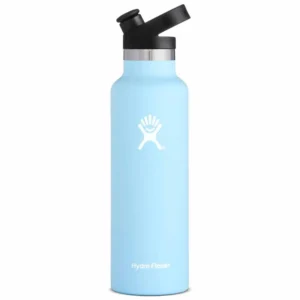
Hydro Flask with Sport Cap
Hydro Flask as a brand is not as old as Camelbak. They were founded in 2009 but have been growing fast and cranking out some really good bottles ever since. Hydro Flask’s specialty seems to be insulating bottles that can keep cold drinks cold and warm drinks warm. Think of them as the new-age Thermos. Being based in Bend, OR, they are in a prime testing area for any outdoor gear.
Hydro Flask tops are wider and bigger than Yeti, and the handle strap is softer, which some prefer. Over the last couple of years, Hydro Flask has leaned into customization and color drops that have given the brand a strong lifestyle following. Limited-edition seasonal colors sell out fast, and the brand has cultivated a loyal community that rivals any in the outdoor space. Beyond aesthetics, their newer Trail Series bottles are lighter weight and built specifically for active pursuits, which addresses one of the few historical criticisms of the brand (that the bottles can feel heavy when full).
- Pros: Nice shape overall; fit well in car cup holders. Durable. No plastic on the interior. Lifetime warranty (one of the best in the business). Wide color selection. Trail Series adds a lighter-weight option.
- Cons: Tops can be awkward to drink from, especially when moving. Heavier than soft-sided bottles. Paint finish can chip with rough use.
OUR FAVORITES:
Hydro Flask Standard Mouth with Flex Cap (21 oz). The Standard bottle has a hard body and incredible insulating qualities. We like it for hiking and keeping nearby during our indoor workouts. The company says it keeps cold fluids cold for up to 24 hours and hot drinks warm for up to 12 hours, and in our experience those claims hold up remarkably well. The Flex Cap is comfortable in the hand, and the powder-coated finish gives you a secure grip even when the bottle is sweating on a humid day. As the name suggests, this is really the all-purpose model from the Hydro Flask lineup. Durable. Just be sure you are looking for a hard-body bottle if that is what you want. Find here on Amazon.
Hydro Flask Wide Mouth with Straw Lid (32 oz). For those who prefer sipping over tipping, the Wide Mouth with Straw Lid has become a fan favorite. The wide opening makes it easy to add ice, clean, or toss in a flavor packet, and the press-in straw lid lets you hydrate without unscrewing anything. We find this combination especially handy at a standing desk or on a long road trip. The 32 oz size is large enough that you are not constantly refilling, yet it still fits most standard cup holders. If you tend to sip steadily throughout the day rather than gulp, this setup is worth a serious look.
Hydro Flask Trail Series Lightweight (24 oz). New to the lineup and worth calling out: the Trail Series is Hydro Flask’s answer to the “I love the insulation, but the weight bugs me” crowd. It is about 25% lighter than the standard bottle, thanks to a thinner-gauge stainless steel, while still offering solid cold retention (though not quite as long as the standard line). If you are counting ounces in a running vest or day pack, this is a strong pick.
YETI BOTTLES
Yeti took the world by storm in 2014 when REI began carrying them, but they have been around since 2006 selling their well-known coolers. The Austin-based company also began making fluid bottles, and they are made well. Much of the product line is stainless, built more for outdoorsy pursuits and travel. However, for our active audience, we think there are a few excellent options worth considering. We love that all of these bottles are made to be dishwasher safe, something that is often overlooked but highly appreciated.
In the last year or two, Yeti has expanded its bottle lineup considerably. The introduction of the Yonder series brought a lightweight, BPA-free plastic option into the fold, which is a notable departure from the brand’s all-stainless reputation. They have also rolled out the Rambler with a Chug Cap and a Straw Cap, giving buyers more ways to drink without having to unscrew the entire lid. These additions show that Yeti is listening to feedback and broadening its appeal beyond the truck-bed-and-tailgate crowd.
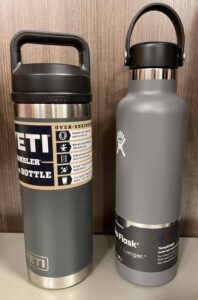
The Yeti top has a smaller opening, but a hard handle strap on the lid. Not better or worse, but all about personal preference.
- Pros: Large sizes available for great volume if you just want to carry one bottle. Dishwasher safe across the board. No plastic on stainless models. Excellent cold retention. Extremely tough construction. New Yonder line offers a lightweight plastic alternative.
- Cons: More limited warranty (5 years vs. lifetime for Hydro Flask). Difficult to use on the move. Might actually be too large for some. Premium pricing.
OUR FAVORITES:
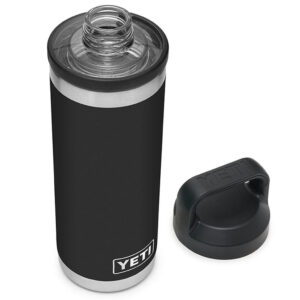
Yeti Rambler 18 oz with Chug Cap. Great for rugged use.
An excellent, hard-body bottle, this will keep fluids hot or cold for a very long time, and is highly durable. We like this model for activities such as hiking, kayaking, and fishing. When coupled with a good backpack, the right hiking boots, and sun, bug, and rain protection, the Yeti can give you largely what you need for a long walk out in the backcountry. The double-wall vacuum insulation is some of the better engineering we have seen in these bottles. The Chug Cap (now often sold as the default lid) makes it much easier to drink on the go compared to the original screw-top, which was one of our earlier criticisms. Find here on Amazon.
Yeti Rambler 18. Great for rugged use.
Yeti Rambler 26 oz with Straw Cap. We have shifted our larger-size Yeti pick from the 36 oz to the 26 oz for most users, and here is why: the 26 oz is big enough for a solid half-day of hydration, yet it still fits in most vehicle cup holders and does not feel like a dumbbell in your pack. Pair it with the Straw Cap, and you get easy sipping without having to tilt the bottle. The insulation and durability are every bit as good as the 36 oz version, so you are not sacrificing performance. If you truly need a massive reservoir and will not mind the extra weight and bulk, the 36 oz is still available and still excellent. But for most people, the 26 oz hits the sweet spot.
Yeti Yonder 25 oz. This is the wild card in the Yeti lineup. The Yonder is a lightweight, shatter-resistant plastic bottle (BPA-free, of course) that weighs next to nothing compared to its stainless siblings. It does not insulate, so this is purely a “carry water, drink water” bottle. But for trail runners, ultralight hikers, or anyone who just wants a tough, no-frills bottle that is easy to toss in a bag, it is a surprisingly good option from a brand known for heavy-duty stainless steel.
OUR RECOMMENDATION:
So which bottle is best? It depends on your intended use, but here is our recommendation:
Best for Cycling: Camelbak Podium Big Chill. Perfect size for a bike water bottle holder, and keeps your fluid cold on a hot day. The self-sealing valve means no leaks, no fuss.
Best for HIIT, Weight, or Yoga Workouts: Hydro Flask Standard Mouth 21 oz with Flex Cap. (here). Good for a quick drink, durable, and the powder-coat finish prevents it from sliding on a gym floor.
Best for Hiking and Kayaking: Yeti Rambler 18 oz with Chug Cap. Bulletproof construction. It can roll around in a canoe or fall on a rock and will still perform.
Best for All-Day Desk and Errand Hydration: Hydro Flask Wide Mouth 32 oz with Straw Lid. Sip all day long without ever unscrewing a cap.
Best Lightweight Option: Yeti Yonder 25 oz. When every ounce counts, this BPA-free plastic bottle keeps things simple and featherlight.
Best for Hands-Free Hydration: Camelbak Classic Light Hydration Pack. When you want to keep your hands on the handlebars or trekking poles, a reservoir on your back is hard to beat.
WHAT TO LOOK FOR IN HIGH-END WATER BOTTLES
There are a few things to look for in your water bottle as you are comparing. Here are a few factors to keep in mind:
Intended Use
Perhaps the most important factor is to match the bottle with your intended use. Cycling, for example, requires bottles that fit in the typical bottle holder on a bike. Running and cycling generally are most conducive to a squeezable bottle that can squirt the fluid through a nozzle. Hiking and Kayaking are often most suited to harder-cased bottles, because it just takes one slip against a hard surface to essentially crush the bottle. If you think you will be using the bottle to keep coffee hot or water cold, be sure to go with one of the bottles with better insulating qualities.
Durability
Making sure you have a bottle or flask that is durable is key. Everything we recommend above has been proven to be durable. They tend to have good construction, plenty of quality control in the production, and are durable for their intended use. But be careful when looking at cheaper models from upstart makers. They are often simply sourcing the bottles in China and trying to sell them en masse, in many cases without even testing them first. Pay attention not only to the bottle construction but also to the quality of the lid or nozzle. There is nothing worse than a leaky top to your expensive bottle.
Size and Capacity
One of the main choices you will make is on the size or fluid capacity of the bottle you buy. This all depends on what you are using the bottle for, but just remember that a large bottle full of fluid can be quite heavy, and add lots of weight to your hike or run. For all-purpose use, we like the 16 to 22 ounce range. That tends to be a bottle that can hydrate you for a long time without making the vessel too heavy when full. If you plan to go longer between refills, something in the 26 to 32 ounce range can save you a stop, but expect to feel the extra weight.
Insulation Technology
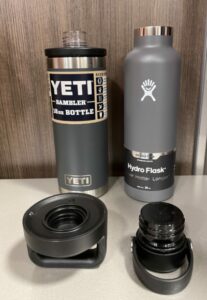
If temperature retention matters to you, pay attention to how the bottle is insulated. Double-wall vacuum insulation is the gold standard in this space. Both Hydro Flask and Yeti use this technology, and it works by creating a vacuum between an inner and outer wall of stainless steel. That vacuum dramatically reduces heat transfer, which is why these bottles can keep ice frozen for the better part of a day. Single-wall bottles, by contrast, will sweat and lose temperature quickly. And dual-wall bottles that are insulated with foam rather than a vacuum fall somewhere in between. For warm climates or long outings, vacuum insulation is worth the investment.
Weight
Weight is something that does not get enough attention in water bottle discussions. A 20 oz stainless steel vacuum-insulated bottle weighs roughly 12 to 13 ounces empty. Add 20 ounces of water and you are carrying about two pounds. That might not matter on your desk, but on mile eight of a hike it can feel significant. Lightweight options like the Yeti Yonder or the Hydro Flask Trail Series cut that empty weight considerably. If you are a gram-counter or an ultralight enthusiast, factor weight into your decision early.
Lid and Cap Design
Different lid designs suit different activities. A screw-top lid is simple and leak-proof but requires two hands. A chug cap lets you drink quickly with one hand. A straw lid allows for steady sipping without tilting the bottle at all. A squeeze nozzle (like on the Camelbak Podium) is ideal for drinking while cycling or running. Think about when and how you will be drinking, and choose a lid that matches. Many bottles now offer interchangeable caps, so you can buy one bottle and swap lids based on your activity for the day.
Price
Price is always a factor, but the good news is that there is lots of range in the models that we recommend above. You will find bottles that cost anywhere from $15 at the low end to over $50 at the high end. The Camelbak hydration pack runs a little more, around $60 or $70. Just be sure to spend enough on a bottle so you don’t have to end up buying another one a month later due to poor construction quality. We are big proponents of buying quality upfront so you have less waste down the road.
Ease of Cleaning
Make sure that your bottle is low maintenance. Most bottles are dishwasher safe, and for the ones that aren’t you will just want to be sure that cleaning can be easily done. This means not getting anything that traps liquid in small nooks that are hard to clean or rinse, and having parts that disassemble enough so you can really clean them well. Straw lids and sport caps tend to have more small parts, so take them apart regularly and give them a good scrub.
BPA Free
BPA is a material found in many hard plastics and resins. Studies suggest that it can leach into the food or liquid it is carrying, and then enter the human body. Once in the body, there are a number of harmful effects that it is believed to be linked to. This seems to be more pronounced as the bottle ages. It is best to avoid any plastic bottles the contain BPA. The good news is that all three brands we cover here are BPA-free across their entire product lines.
Environmental Considerations
One reason the reusable bottle market has grown so much is the increasing awareness of single-use plastic waste. Investing in a quality reusable bottle is one of the simplest swaps you can make to reduce your environmental footprint. Many brands are going further now. Camelbak, for instance, uses recycled materials in some of their Tritan Renew bottles. Hydro Flask partners with Parks for All, donating to help build, restore, and maintain public green spaces. Yeti supports conservation organizations through various partnerships. If sustainability matters to you (and it should), these brands are at least moving in the right direction.
What Fluid to Put In the Bottle?
This could be the topic of an entirely unique piece. Maybe we will do it someday soon. The short answer is that the best thing to fill your bottle with depends on what you are doing. If you are just out for a stroll on a dusty trail in moderate temps, some ice water would be great. If you are cycling or running and losing sweat at a rate that is much higher than normal, consider mixing some electrolytes in. A good rule of thumb is to stay “hypotonic,” or keeping the electrolyte blend in the drink lower than that of what is in your own body fluid. This way, your body can absorb whatever you are drinking faster. Max out at about 8% carb content in any mix you are using. For everyday hydration at your desk or around the house, plain filtered water is really all you need. Save the electrolyte mixes for when you are truly sweating.
HOW DO YOU CLEAN A WATER BOTTLE?
Remember to clean your water bottle frequently. Do not just pour new water in on top of old. Every day or so, your bottle needs to be completely emptied, rinsed, and allowed to fully dry. Otherwise, bacteria can fester in the water that never truly gets eliminated.
For cleaning, we like to soak a bottle in warm or hot soapy water. Rinse it a few times to be sure you get all of the soap out, and then let the bottle dry upside-down in a drying rack. To the extent you can, wipe the neck and the top of the bottle down with your dish rag or cloth. For a deeper clean, try mixing a tablespoon of baking soda with warm water, letting it sit in the bottle for 15 minutes, and then rinsing thoroughly. A bottle brush can be a lifesaver for reaching the bottom of narrow-mouth bottles. If your bottle develops a smell, a splash of white vinegar left overnight will usually take care of it.
FREQUENTLY ASKED QUESTIONS
Is Hydro Flask or Yeti better for keeping drinks cold?
Both brands use double-wall vacuum insulation and perform very similarly. In side-by-side tests, the differences are usually measured in minutes rather than hours. Both will keep ice intact for well over 12 hours in normal conditions. If cold retention is your top priority, you will be happy with either brand. The bigger variable tends to be how often you open the lid rather than which brand you picked.
Can I put hot coffee or tea in a Hydro Flask or Yeti bottle?
Yes. Both are designed to handle hot beverages and will keep them warm for up to 12 hours. Just be careful with wide-mouth openings when drinking, and avoid using lids with straws for very hot liquids. Some users prefer a narrow-mouth or travel-style lid for coffee to reduce the risk of spills.
Are Camelbak bottles dishwasher safe?
Most Camelbak bottles are dishwasher safe on the top rack. However, always check the specific product instructions, especially for bottles with more complex valve or cap systems. Hydration reservoirs (like those in backpack systems) should be hand-washed and air-dried.
Why are Yeti and Hydro Flask bottles so much more expensive than generic brands?
You are paying for higher-grade stainless steel, superior vacuum insulation, better quality control, and a stronger warranty. Generic bottles can look similar on the outside but often use lower-quality materials and less precise manufacturing, which can result in lids that leak, insulation that fails, or finishes that peel. Over time, a well-made bottle from a reputable brand tends to cost less because you are not replacing it.
Do any of these bottles fit standard car cup holders?
Most bottles in the 18 to 24 ounce range from all three brands will fit standard cup holders. Once you get into the 32 ounce and larger sizes, fit becomes hit or miss. The Hydro Flask Standard Mouth is particularly cup-holder friendly because of its slimmer profile. If cup-holder fit is important to you, measure your holder and check the bottle diameter before buying.
How often should I replace my water bottle?
If you have a quality stainless steel bottle from Hydro Flask or Yeti, and you clean it properly, there is no set timeline for replacement. These bottles can last for years. Replace if you notice dents that compromise the vacuum seal (you will know because the outside of the bottle will start sweating), if the lid no longer seals properly, or if the interior develops stains or odors you cannot remove. For plastic or soft-sided bottles like some Camelbak models, inspect them more frequently for cracks, discoloration, or lingering smells.
Can I put carbonated or fizzy drinks in these bottles?
You can, but use caution. Carbonation creates pressure inside a sealed bottle, and opening the lid can result in spraying or overflow. If you regularly drink sparkling water or soda, look for bottles and lids specifically designed to handle carbonation. Standard screw-top lids tend to handle it better than straw lids or sport caps.
What size bottle should I get if I can only buy one?
For most people, a 24 to 26 ounce bottle is the sweet spot. It holds enough water for a couple of hours of activity, fits in most cup holders and pack pockets, and is not too heavy when full. If you tend to go longer without access to a refill, step up to 32 ounces, but be prepared for the added weight and bulk.
Is the Hydro Flask lifetime warranty really lifetime?
Hydro Flask offers what they call a limited lifetime warranty, which covers defects in materials and workmanship for the life of the product. Normal wear and tear, cosmetic damage, and misuse are not covered. In practice, their customer service has a strong reputation for standing behind their products.
Which bottle is best for kids?
All three brands offer smaller, kid-friendly sizes. Camelbak’s Eddy Kids line is particularly popular because of the bite-valve and straw design that reduces spills. Hydro Flask offers a 12 oz Kids Wide Mouth with a straw lid that is colorful and easy to use. Yeti’s Rambler Jr. (12 oz) is nearly indestructible, which is a plus for younger users who are rough on gear.