

The Appalachian Trail is the gem of the Eastern US. The “AT” as it is known is a magnificent footpath that stretches over 2,000 miles from Georgia to Maine, winding through scenic landscapes, lush forests, and rugged mountain terrain. As someone who has experienced the magic of the trail firsthand, I want to share a bit about section hiking, a way to enjoy the trail without committing to a through-hike, which can take months to do. Section hiking allows you to explore the trail in manageable pieces, experiencing the beauty and challenges on your own time.
Each section of the Appalachian Trail has its own unique character and challenges. Over the years, I have tackled sections ranging from the rolling hills and piedmont of the South to the rocky pathways of the North. The diversity of the trail means there is something for every hiker, whether you are looking for a serene forest walk or a strenuous mountain scramble. What is constant, though, is the camaraderie amongst hikers and the sense of accomplishment with each section completed.
Because of the steady foot traffic the AT gets, the entire trail is relatively well-worn and easy to navigate. That does not mean the trail itself is easy. Many parts can require a really good workout, and even seasoned hikers can find themselves humbled by certain stretches.
Planning section hikes involves careful consideration of the time of year, gear, and logistics like transportation and resupply points, but I think the preparation is part of the adventure. You learn to adapt and prepare for what the trail throws at you, and there is a wealth of knowledge to be gained from the hiking community. Every successful section hike boosts your confidence and beckons you back to the trail to see what is beyond the next ridge. I have found that talking to other hikers at shelters and trailheads is one of the best ways to pick up practical tips that no guidebook will ever give you.
One thing worth mentioning for newer section hikers is the concept of a “slack pack.” This is when you hike a section with only a day pack, having your gear shuttled ahead to your next stop. It is a great way to cover more ground comfortably, and many hostels and outfitters near the trail offer this service. It is a smart option if you want to get a feel for a tough section before committing to carrying a full pack through it.
Quick Comparison: AT Section Hikes at a Glance
Section | Miles | Difficulty | Best Season | Key Highlight |
Great Smoky Mountains | ~75 | Moderate to Strenuous | April to June, Sept to Oct | Clingman's Dome (6600 ft) |
Shenandoah National Park | ~100 | Moderate | May to October | Mary's Rock Sunrise, Old Rag |
The White Mountains | ~80 | Strenuous to Very Strenuous | June to September | Presidential Range, Mt. Lafayette |
4 State Challenge | ~43 | Moderate | April to November | Harper's Ferry WV |
100 Mile Wilderness | ~100 | Strenuous | June to September | Mt. Katahdin, White Cap Mtn |
Good AT Section Hikes
Embarking on section hikes along the Appalachian Trail offers a unique opportunity to experience some of the most remarkable landscapes and challenges on the East Coast. Below, I share my first-hand encounters with each of my favorite sections, highlighting the natural beauty and the hiking specifics that I’ve found especially compelling.
Great Smoky Mountains National Park
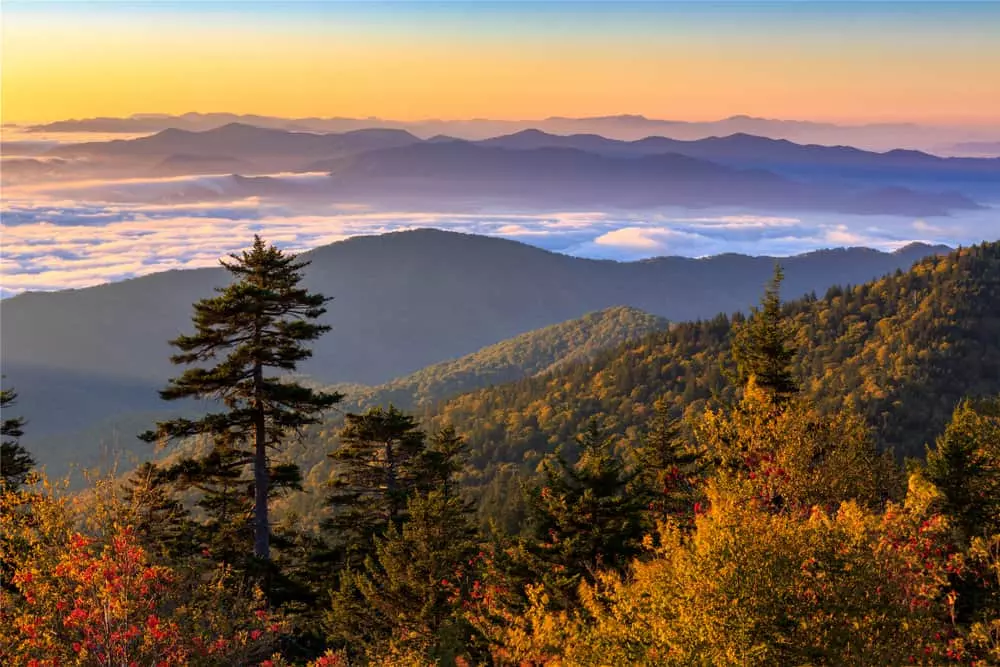
Starting my journey at Fontana Dam, I entered the Great Smoky Mountains National Park and was immediately captivated by the vast stretches of wildflowers that seemed to go on forever. Hiking through the park, which spans around 75 miles, the sights at Clingman’s Dome and the historic Shuckstack Fire Tower were memorable. I recommend stopping at Newfound Gap for some of the best day hikes. Just remember, if you’re planning to stay overnight in the backcountry, securing a permit and shelter reservation is crucial.
You will be straddling the Tennessee – North Carolina border during this entire stretch of the trail, and it is all pretty rugged. Elevation is relatively high — much of the trail is above 5,000 feet and Clingman’s Dome gets you all the way up to 6,600 feet.
Wildlife is a very real part of hiking through the Smokies. Black bear sightings are common, and you will want to store your food properly using a bear canister or the bear cables available at most shelters. Elk can also be spotted near Cataloochee Valley if you build in some extra time. The park sits in one of the most biodiverse regions in North America, and that richness is something you feel with every mile.
Spring hiking here is particularly special. The wildflower bloom from late March through May is one of the most photographed natural events in the Eastern US, and for good reason. Trillium, lady slippers, and fire pink line the trail in waves of color. Fall foliage in October is equally stunning, with the higher elevations turning first and the color working its way down the slopes over several weeks.
I like to weave this stretch of trail in with a night in nearby Asheville, one of my favorite Smoky Mountain towns anywhere. The food and brewery scene there is genuinely excellent, and it makes for a great reward after a few hard days on the trail.
Shenandoah National Park

In Virginia, the Appalachian Trail meanders through about 100 miles of Shenandoah National Park. Less mountainous than the Smokies, this area is adorned with lush forests and panoramic rock vistas. My personal break at a wayside for a hearty meal and a cold drink was a delight and helped fuel the miles ahead. To catch a sunrise from Mary’s Rock is a must-do, and with a $30 vehicle entry fee granting a week’s access, you would want to explore as much as possible.
One thing to know about Shenandoah is that it is a long national park, and where you are in it dictates the type of hiking you will have. I prefer the North part of the park, between Luray and Front Royal. It just feels unique to me, and you will walk by several abandoned farmhouses from the 1800s along with having some great views, many of them looking West toward West Virginia.
Skyline Drive runs parallel to much of the AT through Shenandoah, which is both a convenience and an asset for section hikers. Because the road crosses the trail at multiple points, logistics are relatively simple here compared to more remote sections. You can park a car, hike a stretch, and shuttle back without a ton of hassle. This makes Shenandoah one of the more beginner-friendly sections on this list, even if it is by no means flat or easy.
While the park’s most popular trail, Old Rag Mountain, is not part of the AT, you can access it from the AT with a little planning. It is worth the trip. Old Rag is a challenging hike with some of the best views in the entire Blue Ridge Mountains. The rock scramble near the summit is genuinely fun and a bit different from typical AT terrain.
Deer are practically everywhere in Shenandoah, and bear sightings are not uncommon either. The park sits in a relatively populated part of Virginia, but the wilderness still feels real and present once you are a few miles from any trailhead.
The White Mountains
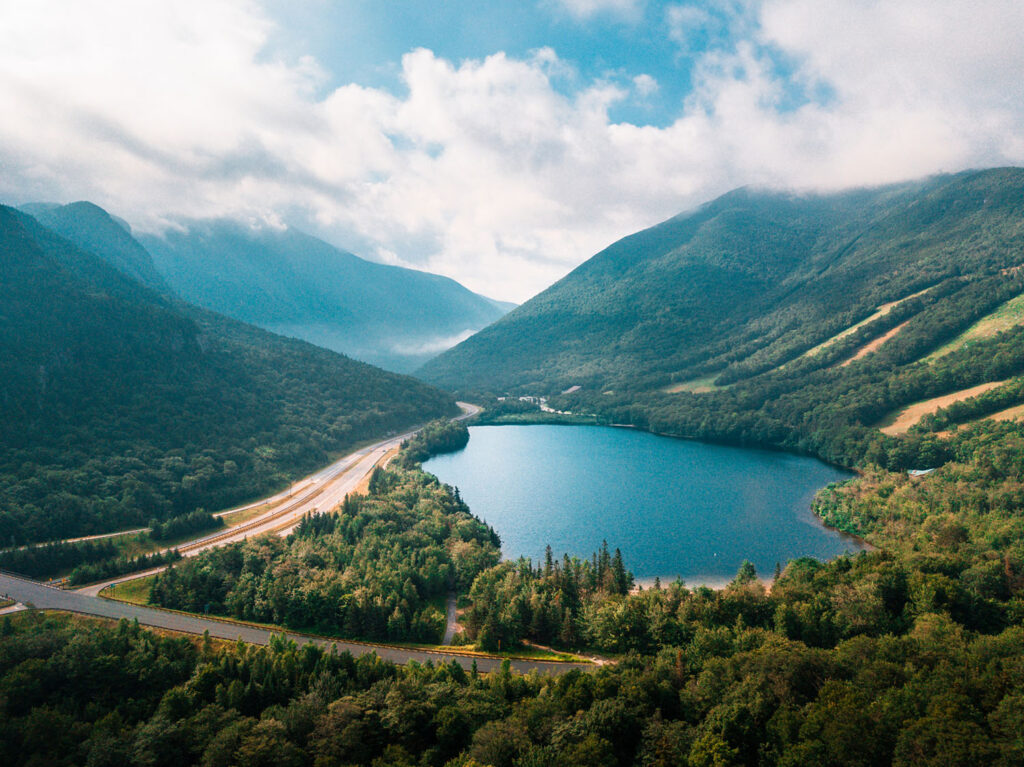
The experience of hiking through The White Mountains in New Hampshire is simply awe-inspiring. The elevations can soar above 4,000 feet, and the terrain can be quite challenging with steep inclines and rugged footing. Despite the difficulty, the views from peaks like Mount Lafayette are absolutely rewarding.
The White Mountain stretch, about 80 miles, is considered by many to be one of the hardest sections of the AT. So it can be worth a try if you are up for it, but if you are just looking for a nice easy hike to get acclimated to the AT, this might not be the first one you should tackle. Footing can be tough, inclines can be steep, and you will actually spend some time above the treeline, exposing you to weather.
The AMC (Appalachian Mountain Club) hut system is one of the most unique features of hiking this section. These staffed backcountry huts are spaced roughly a day’s hike apart along the Presidential Range, and they offer bunk sleeping and hot meals. It is a completely different experience from camping, and if you have never stayed in a hut before, this section is the place to try it. Reservations fill up fast, especially in July and August, so book well in advance.
Be sure to tackle the notorious Presidential Range, but prepare well, as the weather can be unpredictable. It can change fast, especially in the shoulder seasons bordering winter in April and May and October and November. Mount Washington in particular holds the record for the highest wind speed ever recorded on Earth’s surface at a surface station, and that statistic should tell you something about what the conditions can look like up there. Layers and rain gear are non-negotiable, even on days that look clear at the trailhead.
4 State Challenge

This 43-mile odyssey traverses Virginia, West Virginia, Maryland, and finally into Pennsylvania, which is exactly why they call it the 4 State Challenge. It offers a thrilling journey through diverse landscapes and rich historical sites. While many hikers aim to conquer this stretch within 24 hours, I chose a different approach, savoring each moment and immersing myself in the views and cultural heritage along the way.
One of the highlights of the hike was undoubtedly the historic town of Harper’s Ferry, nestled at the confluence of the Potomac and Shenandoah rivers. Stepping through its quaint streets felt like stepping back in time, with its well-preserved buildings and fascinating tales of the past. Taking the time to explore this iconic landmark added a layer of depth to the journey, reminding me of the trail’s profound connection to American history. The National Historical Park here is free to visit, and the exhibits on John Brown’s 1859 raid are genuinely worth your time.
The AT Conservancy headquarters is also located in Harper’s Ferry, and stopping in is a nice way to connect with the broader community of the trail. You can get your photo taken at the halfway point marker and flip through the journals of through-hikers who have passed through before you.
As for the trail itself, expect a medley of terrains, from gentle meadows to a few rugged mountain passes. The shelters in Maryland, in particular, stand out for their cozy ambiance and welcoming atmosphere, providing a welcome respite after a day of trekking. The Maryland stretch is also home to some surprisingly well-maintained rocky ridgelines that offer long views to the West, making it one of the more underrated scenic stretches on the entire trail.
This section works well as an introduction to multi-day AT hiking because the terrain is manageable, resupply is accessible, and the historical context gives the miles an added dimension that purely wilderness sections sometimes lack.
100 Mile Wilderness in Maine
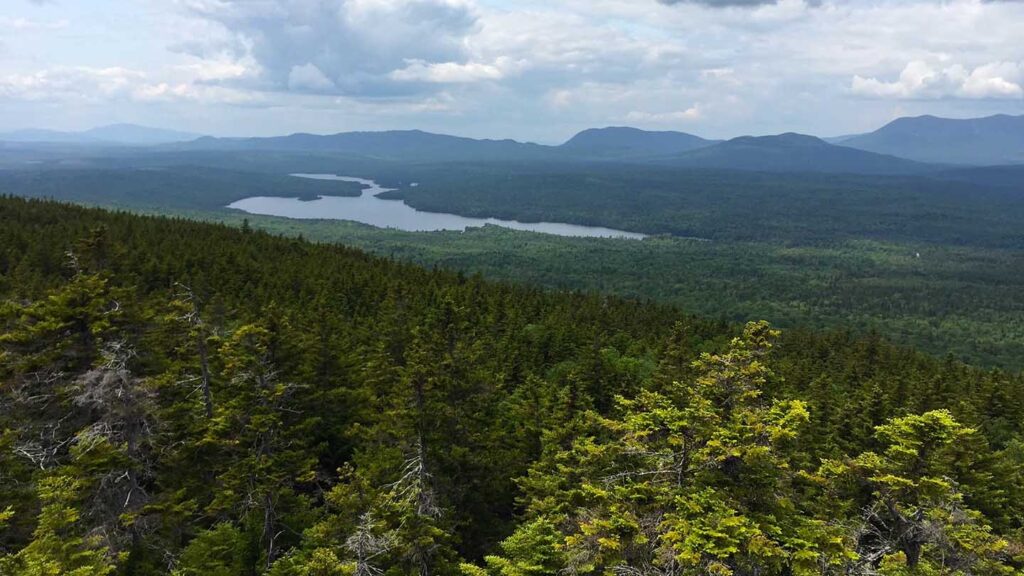
For those seeking complete immersion in nature, the 100 Mile Wilderness in Maine is a pristine and remote stretch. This section demands more careful preparation than other parts of the trail, as resupply points are nonexistent. You will want to pack plenty of camping meals and a small camping kitchen along with you. The terrain is a mix of serene lake shores and demanding mountain ascents.
Maine obviously can get cold early in the season. By October, the lows are typically dipping down into the 30s pretty regularly. Plan accordingly for your hike, but know that as long as you have the right gear, you will do fine.
Water sources are plentiful throughout the 100 Mile Wilderness, which is a genuine blessing. The ponds and streams here are remarkably clean, though you should always filter before drinking. A reliable filter or purification tablets are non-negotiable in this section. The flip side is that some of the trail can be boggy and wet underfoot, so waterproof footwear or at minimum waterproof gaiters can make a big difference in your comfort levels over the course of a week.
The rugged peaks of the 3,700-foot White Cap Mountain are a highlight, and the random ponds along the trail are fun and interesting. One of the highlights was reaching the summit of Mount Katahdin, the northern terminus of the trail, where I was greeted by sweeping views of the vast wilderness below. The trail itself presented what I would say is a strong challenge level, with steep ascents, rocky descents, and unpredictable weather.
It is worth noting that Mount Katahdin itself sits within Baxter State Park, which has its own entry and camping reservation system separate from the AT. Day hikers need to arrive early, as the park enforces a cap on daily visitors and parking fills up quickly during peak season. If a Katahdin summit is your goal, plan that piece of the logistics carefully and do not leave it to chance.
I found the solitude profound, with only the rustling leaves and distant calls of loons as my soundtrack. There is genuinely nothing quite like it on the Eastern Seaboard, and if you have been putting it off because of the logistics, I would encourage you to stop waiting.
FAQ About Section Hiking the AT
What is the difference between section hiking and through-hiking the Appalachian Trail?
Through-hiking means completing the entire 2,000-plus miles of the AT in one continuous journey, which typically takes five to seven months. Section hiking means completing the trail in pieces over multiple trips, which can span years or even decades. Many people find section hiking to be a far more practical approach to experiencing the AT, since it fits around jobs, families, and budgets without requiring a months-long commitment.
Do I need a permit to hike the Appalachian Trail?
For the trail itself, no general AT permit exists. However, certain sections pass through national parks and state lands that have their own rules. Great Smoky Mountains National Park requires a backcountry permit for overnight stays. Baxter State Park in Maine has its own reservation and entry system for Mount Katahdin. Shenandoah charges a vehicle entry fee. Always check the specific regulations for whatever section you are planning before you go.
What is the best time of year to section hike the AT?
It depends heavily on the section. Southern sections like the Smokies are best in spring and fall. Mid-Atlantic sections like Shenandoah and the 4 State Challenge have a long window from May through October. Northern sections like the White Mountains and the 100 Mile Wilderness in Maine are best from June through September. Snow and ice can make higher elevation sections genuinely dangerous outside of those windows.
How do I handle transportation logistics as a section hiker?
This is one of the trickiest parts of section hiking. The AT is a point-to-point trail, not a loop, so getting back to your starting point requires planning. Common solutions include setting up a car shuttle with another hiker or friend, using local shuttle services (many hostels and outfitters near the trail offer this), or using a combination of buses and taxis in areas where public transit reaches near the trailhead. Apps like the Guthook AT Guide are helpful for finding nearby services.
How much does it cost to section hike the Appalachian Trail?
Costs vary widely depending on your gear setup, how long you are out, and what services you use. Day or weekend section hikes can be very affordable, with costs mainly going toward food, gas, and any park fees. Multi-day trips add in gear amortization, food resupply, possible hostel stays, and shuttle fees. A rough rule of thumb borrowed from through-hikers is about $1 per mile per day when you factor everything in, though section hikers often spend less since they are not covering as many miles per day as through-hikers tend to.
What gear do I absolutely need for AT section hiking?
The essentials are the same as for any backpacking trip: a reliable pack, shelter (tent or hammock), a sleeping bag rated for the conditions you expect, a sleeping pad, a water filter, navigation tools (map and either a compass or a trail app), food, a first aid kit, and appropriate clothing layers. For the tougher and more remote sections like the White Mountains and the 100 Mile Wilderness, emergency communication devices like a personal locator beacon are a smart addition. Never underestimate the AT’s ability to create difficult conditions even in good weather.
Can beginners section hike the AT?
Absolutely, but section selection matters a lot. The 4 State Challenge and parts of Shenandoah National Park are excellent starting points for newer hikers. The White Mountains and the 100 Mile Wilderness in Maine are better saved until you have some miles and confidence under your feet. Starting with shorter, more accessible sections builds the skills and experience you need to tackle the harder ones safely and enjoyably.
Is the Appalachian Trail safe to hike alone?
Millions of people hike the AT solo every year, and it is generally considered a safe trail. The high foot traffic on most sections means you are rarely completely isolated, especially near popular trailheads and shelters. That said, standard solo hiking safety practices apply: tell someone your itinerary, carry a way to call for help, and trust your instincts if a situation feels wrong. Women hiking solo on the AT is very common, and the trail community tends to be welcoming and tight-knit.